
Last updated November 25, 2026
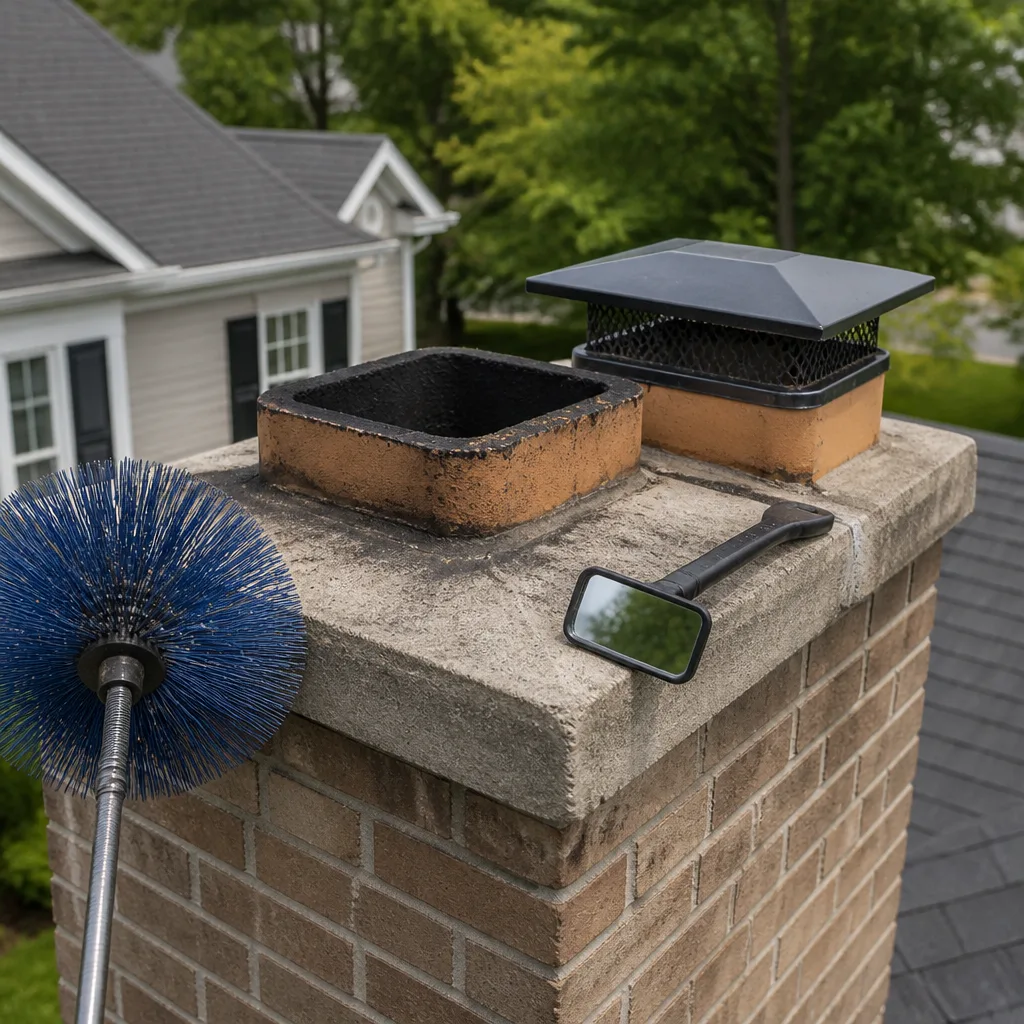 Sweep & inspection
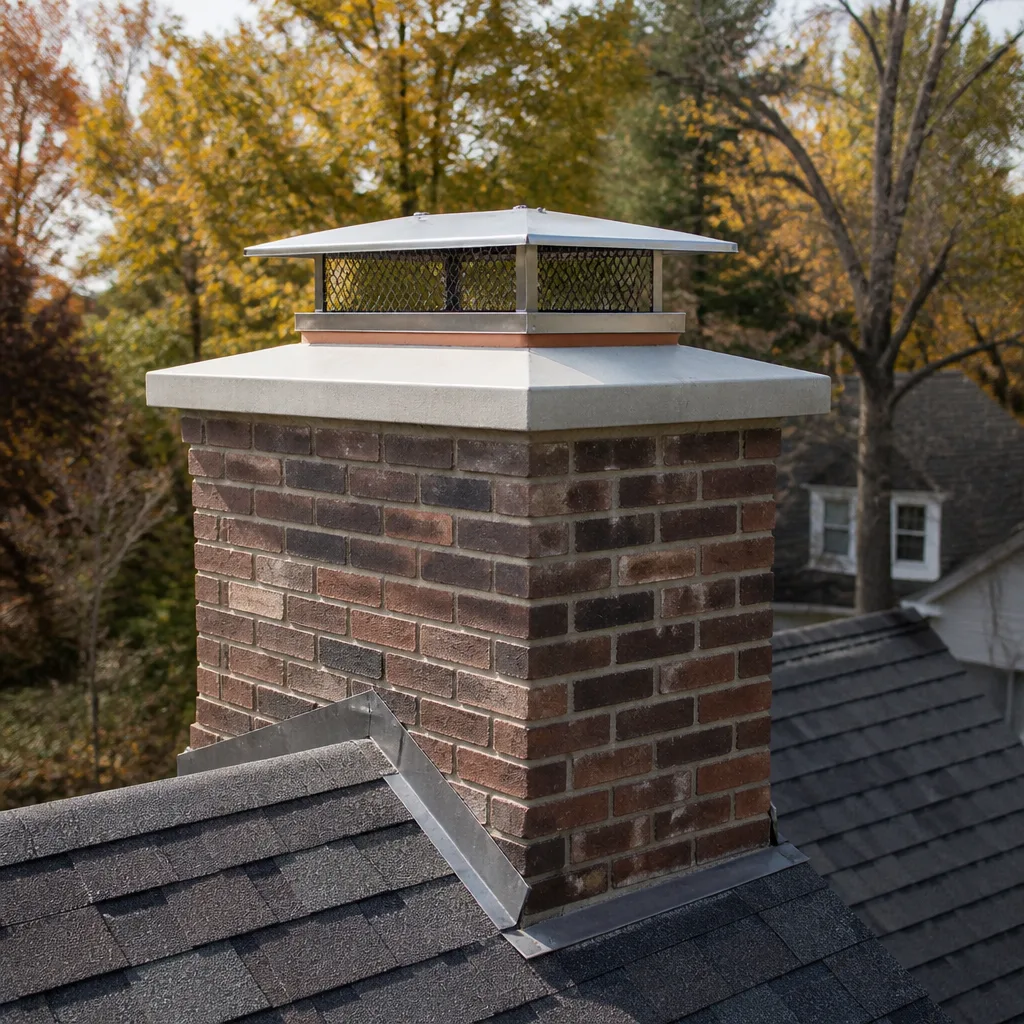 Caps & crowns
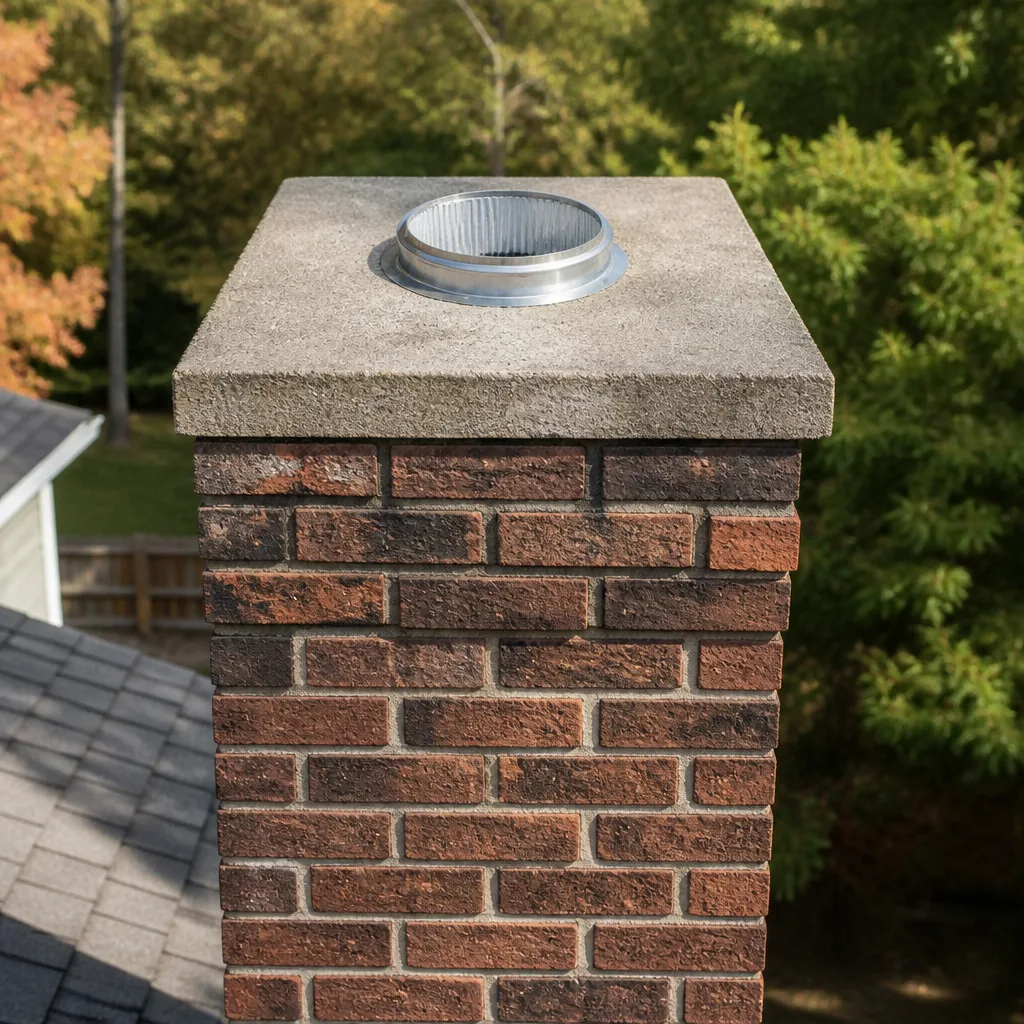 Flue relining
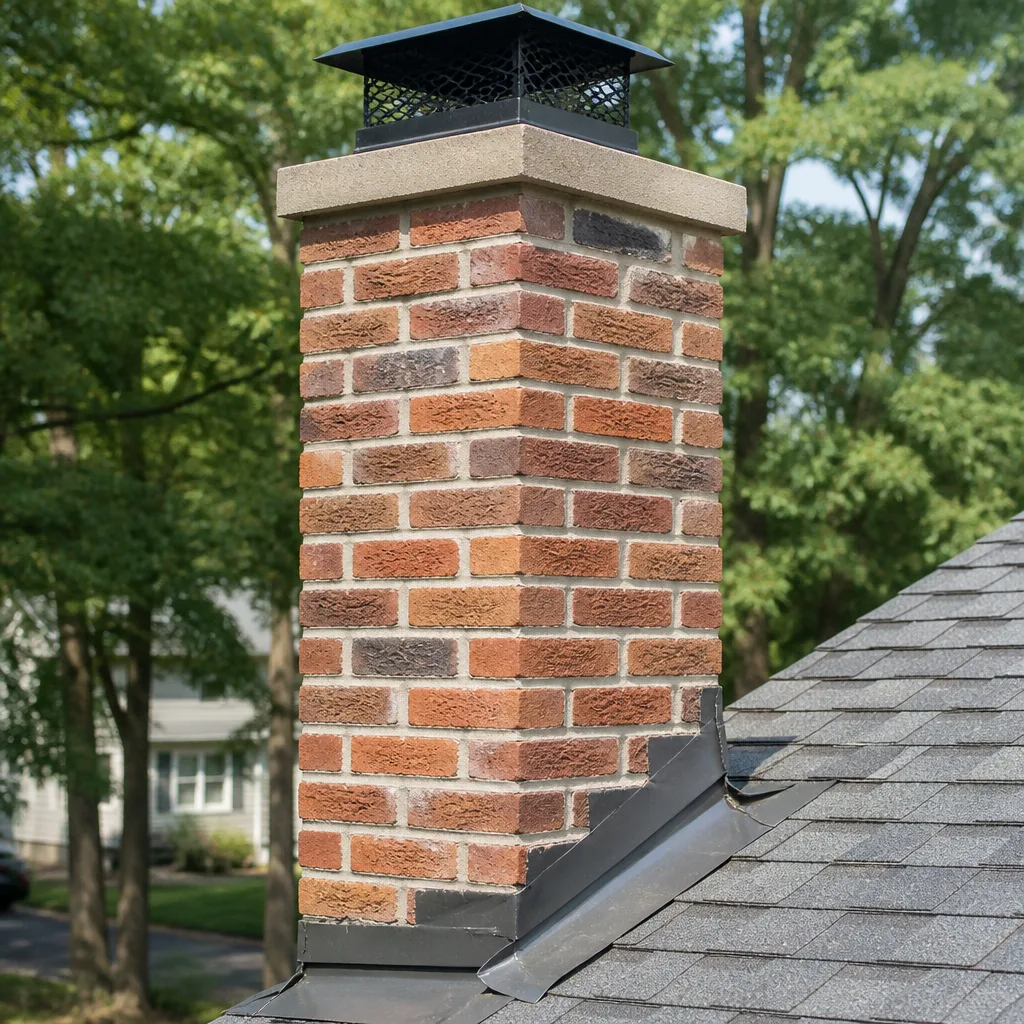 Masonry repair
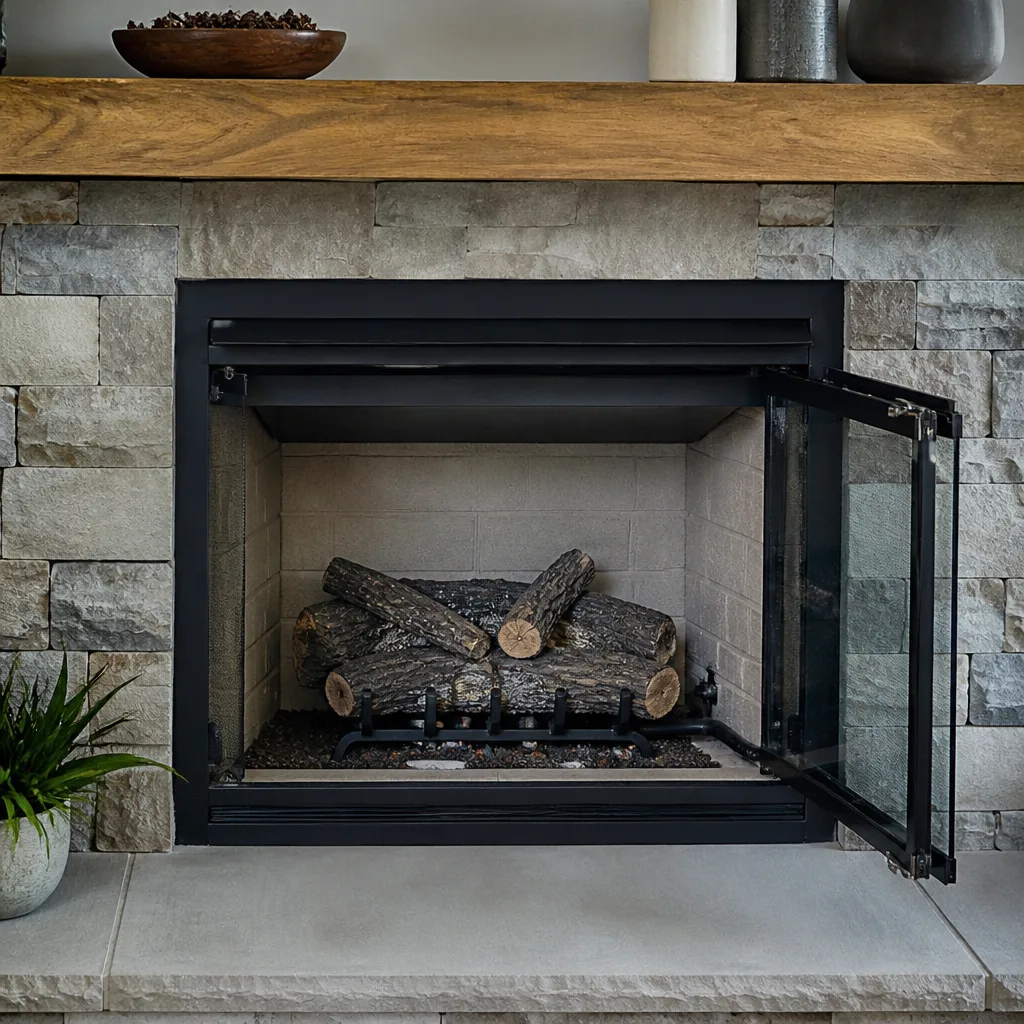 Gas fireplace service
Level 1 sweep and inspection to the NFPA 211 annual standard - flue, crown, cap, and flashing checked and photographed
Chimney sweep logs do not sweep chimneys. They loosen some creosote - which then falls where a brush and vacuum still have to collect it.
Chimney Cleaning Cost Breakdown: The La Habra Homeowner’s Reference for 2026
A $79 chimney cleaning coupon and a $299 professional sweep are not competing versions of the same service. They’re structurally different scopes of work, and the gap between them isn’t quality in the abstract. It’s camera inspection, roof access, creosote grading, documentation, and what happens when the technician finds a cracked flue tile halfway through the job. Knowing what’s excluded from the low quote is worth more than knowing the price. In this guide, we break down every line item that drives chimney cleaning cost in La Habra, from the labor realities of steep-pitch tile roofs to the material difference between a HeatShield liner restoration and a generic patch compound. You’ll learn how to read a quote line by line, spot scope exclusions before they become upsells, and recognize a fair 2026 price for five common scenarios.
Quick Answer
A standard chimney cleaning in La Habra typically runs $150 – $299 for a straightforward single-flue sweep with a Level I visual inspection. Add a Level II camera inspection and you’re usually looking at $250 – $450 total. If the sweep uncovers a damaged flue liner, resurfacing with HeatShield typically lands between $1,800 and $4,200 depending on flue length and access, while a full reline with a DuraFlex flexible system ranges from $3,500 to $7,500. The written estimate always sets the final price.
Styles & brands we work with
- Sweep & inspection
- Caps & crowns
- Flue relining
- Masonry repair
- Gas fireplace service
Table of Contents
- What Actually Drives Chimney Cleaning Cost in La Habra?
- What Does a Standard Chimney Cleaning Cover?
- Level I vs. Level II Inspection: What’s the Price Difference?
- Labor Cost Drivers Specific to La Habra Homes
- Material Costs: Industry-Grade vs. Generic Substitutes
- How to Read a Chimney Cleaning Quote Line by Line
- Five Common Chimney Scenarios and Realistic 2026 Price Ranges
- Common Mistakes to Avoid
- When to Call a Professional
- Frequently Asked Questions
What Actually Drives Chimney Cleaning Cost in La Habra?
Chimney cleaning pricing in La Habra varies by a factor of three or more across contractors, and the variation isn’t random. Four cost drivers account for most of the spread: the scope of work included, the access difficulty of your specific roof, the technician’s time and equipment, and the materials used for any repair that follows the sweep.
Scope of work is the biggest lever. A sweep that includes a camera inspection, a written photo report, and a creosote grading is a fundamentally different job than a brush-and-vacuum only. The first takes longer, uses more equipment, and produces documentation you can hand to a buyer or an insurer. The second is a surface pass.
Access difficulty matters more in La Habra than in many nearby cities. A significant share of homes here were built in the mid-20th century with steep-pitch tile roofs, and a lot of them are two-story. Getting a technician, brushes, and a camera safely onto that roof takes time and equipment that a single-story ranch with a shallow pitch doesn’t require. Labor is the single largest line item in any chimney quote, and roof access adds to it.
Equipment transport is the fourth driver, and it’s the one homeowners rarely think about. A local operation can move rods, cameras, and vacuums to a La Habra address without a long drive adding to the bill. A distant operation builds that travel into the price or into a minimum charge.
- Scope: cleaning only, cleaning plus inspection, or cleaning plus inspection plus repair
- Access: roof pitch, roof height, number of stories, tile vs. shingle surface
- Time: flue length, creosote thickness, number of flues or appliances connected
- Materials: industry-grade repair compounds versus generic substitutes
- Travel: local vs. distant contractor base
What Does a Standard Chimney Cleaning Cover?
A standard chimney cleaning covers the removal of soot, creosote, and debris from the firebox, smoke chamber, damper, and flue, followed by a Level I visual inspection of the accessible portions of the venting system. In La Habra, a straightforward single-flue wood-burning fireplace sweep typically falls in the $150 – $299 range. That price assumes the technician can access the flue from the roof or the firebox without special rigging and that the chimney isn’t blocked by a heavy creosote load or a nest.
Here’s what a competent standard sweep involves, step by step:
- Lay drop cloths and set up a HEPA vacuum at the firebox to control dust inside the home
- Inspect the firebox, damper, and smoke chamber visually before brushing
- Brush the flue from the roof down using the appropriate rod and brush for the flue size
- Remove the creosote and soot that collects at the smoke shelf and damper
- Vacuum the firebox and smoke chamber after brushing
- Perform a Level I visual inspection of the accessible chimney exterior, cap, crown, and flue
- Report findings and photograph anything that needs attention
The word “accessible” does the heavy lifting in that list. A Level I inspection looks at what’s visible without a camera or without opening anything up. If the technician can’t see the flue interior from the top or bottom, they can’t tell you what shape the liner is in. That’s why the camera inspection line item matters, and why a quote that bundles only the sweep without mentioning the inspection deserves a closer look.
For a chimney that’s been swept regularly and shows no signs of trouble, that standard sweep is often all you need. The diagnostic value comes from what the technician sees going in. If you’re already seeing smoke rolling back into the room or a strong creosote smell during the warmer months, the sweep is the starting point rather than the whole job. Our chimney sweep visits in La Habra cover sweeping and inspection together so you’re not paying for two trips.
Level I vs. Level II Inspection: What’s the Price Difference?
A Level I visual inspection is usually included in the price of a cleaning. A Level II inspection, which adds a video camera scan of the flue interior, typically adds $100 – $200 on top of the sweep, bringing the combined total to roughly $250 – $450 in La Habra. The Level II is the one that finds hidden flue damage, and it’s the price line most often missing from cheap quotes.
Both levels follow a recognized industry framework, and the difference isn’t just “better.” It’s a different scope for a different purpose.
- Level I: visual check of accessible portions of the chimney, firebox, and connections using basic tools. Appropriate for a chimney under routine annual care with no changes to the system.
- Level II: everything in Level I plus a video scan of the flue interior, and inspection of accessible portions of the attic, crawlspace, and chimney exterior. Required whenever the appliance or fuel type changes, after a chimney fire, after an earthquake or other event that could have shifted the structure, or when a property changes hands.
That last trigger is why Level II pricing shows up so often in La Habra real estate transactions. When a home near downtown La Habra or in the Westridge area goes on the market, the buyer’s inspector often recommends a Level II, and the seller needs documentation of the flue condition before closing. Skipping the camera scan in that situation just delays the discovery to the buyer’s contingency period, when it’s more expensive to resolve.
If your chimney has never been camera-inspected and you’ve owned the home for years, a Level II is a reasonable one-time investment to establish a baseline. Once you know the liner is sound, annual Level I visual inspections during the sweep are usually sufficient until something changes. If you’re not sure which level you need, call us and we’ll walk through the triggers. Call (855) 337-1997. We answer 24/7. Fast dispatch from 7am to 7pm, Sunday through Friday.
Labor Cost Drivers Specific to La Habra Homes
Labor is where La Habra quotes diverge most from quotes in flatter, newer cities. The housing stock here skews toward mid-century construction with steep-pitch tile roofs and two-story footprints, and both of those add technician time. A quote that was priced for a single-story ranch with a walkable roof won’t cover a two-story La Habra home with a tile pitch the technician has to rig for.
Roof pitch and height are the first labor driver. Steep-pitch roofs require the technician to work from a stable position rather than standing on the slope, which means more setup and slower work. Two-story homes add ladder time and equipment staging on both ends.
Roof surface matters too. Tile roofs, common on older La Habra homes, need careful foot placement and often a roof ladder to distribute weight. Walking a tile roof without protection can crack tiles, and a good technician won’t risk your roof to save five minutes. That caution costs labor time and is worth it.
Creosote thickness is the third driver. A light, dusty creosote layer brushes off quickly. A glazed, hardened layer (the kind that builds up when a fireplace is run with poor draft or unseasoned wood) takes longer and may need chemical treatment before it can be safely removed. That’s a material and labor cost that a low quote won’t include.
Number of flues or appliances connected is the fourth. A chimney serving a fireplace and a furnace flue is two flues, not one. Some homes in La Habra have multiple flues in a single structure, and the sweep is priced per flue in most quotes. Confirm that line item before you book.
Finally, transport distance. A contractor driving from outside the area builds travel time into the hourly rate or into a minimum charge. A local operation doesn’t have to. If a quote is dramatically lower than the rest, check what got left out. If it’s dramatically higher, ask why. Both questions are legitimate.
Material Costs: Industry-Grade vs. Generic Substitutes
The material difference between an industry-grade flue restoration and a generic patch compound can be the difference between a repair that lasts and one you repeat in three years. HeatShield, a patented flue resurfacing system, is formulated for the thermal and chemical environment inside a chimney. Generic mortar or refractory patch from a hardware store is not. When a quote is unusually low on the repair side, material substitution is often where the savings came from.
We work with professional-grade product lines including DuraFlex, HeatShield, Gelco, Olympia Chimney, Famco, and Copperfield. That’s not a marketing list. It’s a commitment to materials that carry material performance standards, which means the repair has some expectation of longevity behind it rather than a best-effort statement.
Here’s what the material choice actually affects:
- Heat resistance: chimney liners and repair compounds have to handle flue gas temperatures that ordinary mortar can’t. Industry-grade products are formulated for that environment.
- Bond: a resurfacing compound has to bond to the existing flue tile through thermal cycling. Generic patches fail at the bond line.
- Flexibility: DuraFlex flexible liner systems handle bends and offsets that rigid liner products can’t, which matters on chimneys with offsets that are common in older La Habra homes.
- Documentation: a repair documented with named, recognized products is easier to support when a home sells than an undocumented patch.
A HeatShield restoration is often the right answer when the flue is damaged but structurally sound. It resurfaces the interior without demolition, which keeps the total cost below a full reline. When the flue structure is compromised or the geometry won’t allow resurfacing, a DuraFlex reline is the more appropriate repair, and it costs more. The quote should state which one the technician is recommending and why. If it doesn’t, ask. Our chimney repair work in La Habra starts with that decision, because the wrong repair is more expensive than the right one at any price.
How to Read a Chimney Cleaning Quote Line by Line
A chimney cleaning quote is a scope-of-work document first and a price second. Read it looking for what’s included, what’s explicitly excluded, and what triggers additional work during the visit. The line items that make the difference usually live in the fine print.
Here’s the sequence we’d walk any La Habra homeowner through:
- Confirm the number of flues. A quote for “one chimney” that turns out to have two flues will change at the door.
- Look for the inspection level. If the quote says “cleaning” and doesn’t mention Level I or Level II, ask which one is included and whether a camera is part of it.
- Check for roof access language. Steep-pitch or two-story access sometimes carries a separate line item. Confirm it’s in the price.
- Look for the creosote grading clause. If the technician finds heavy creosote, does the price change? The quote should say.
- Check the photo documentation line. A written report with photos is a value line, not an extra. If it’s not there, ask if it’s included.
- Read the exclusions. Common exclusions include animal nest removal, cap replacement, crown repair, and any flue liner work. Those are the upsells a low quote leaves for the visit.
- Confirm the estimate is written and fixed. A verbal price is not a price. A written estimate that’s set before the work begins is.
The pattern to watch for is a quote that’s low because the scope is thin. A $79 coupon that covers “chimney cleaning” while excluding the inspection, the creosote treatment, and the roof access isn’t a bargain. It’s a lead-in. By the time the technician arrives and the exclusions get explained, the price has moved. The homeowner hasn’t been lied to exactly, but the quote didn’t tell them much either.
At our end, we keep the flat-price sweep agreed before booking, include camera inspection and a photo report where the scope calls for it, and walk any additional findings through the homeowner before anything gets authorized. Nothing is recommended without camera evidence you can see for yourself, and we’ll say plainly when work can safely wait.
Five Common Chimney Scenarios and Realistic 2026 Price Ranges
Here’s how the pricing shakes out across the five scenarios we see most often in La Habra. These are typical estimates, and the written estimate from the technician sets the final price.
- Scenario 1 – Standard sweep, single flue: $150 – $299. Includes brushing, vacuuming, and Level I visual inspection. The right call for a chimney under routine annual care.
- Scenario 2 – Sweep plus Level II camera inspection: $250 – $450. Recommended when the chimney hasn’t been camera-inspected, after a property sale, or after any event that could have shifted the structure.
- Scenario 3 – Sweep plus cap and crown work: $400 – $900 depending on cap type, crown condition, and access. Cap and crown work addresses the primary moisture entry point on the chimney. The cap and crown costs are the ones most often postponed and most likely to cause the next expensive repair.
- Scenario 4 – HeatShield flue resurfacing: $1,800 – $4,200. Appropriate when the flue is damaged but structurally sound. Keeps the existing flue tiles in place and avoids demolition.
- Scenario 5 – DuraFlex full reline: $3,500 – $7,500. The right repair when the flue is compromised or when the geometry rules out resurfacing. Handles bends and offsets that rigid liner products can’t.
Those ranges assume typical La Habra access. A two-story home with a steep tile pitch, an offset flue, or heavy creosote tends toward the upper end. A single-story home with an easy roof tends toward the lower end. If a quote comes in well under the bottom of a range, ask what’s excluded. If it comes in well over the top, ask why, and expect a specific answer.
The cap and crown line deserves extra attention because it’s the one homeowners most often defer. Chimney caps keep rain, animals, and debris out of the flue, and crowns shed water away from the chimney structure. When either is failing, moisture gets into the masonry, and the next repair is structural. Handling the cap and crown while the sweeper is already on the roof is more efficient than a return trip. If you’ve had a bird, squirrel, or raccoon in the flue, a proper cap is the fix. We handle fireplace repair alongside the cap and crown work, since the firebox and the top of the structure are part of the same venting system. If you’re weighing the whole scope, start with our La Habra Chimney Sweep Pros overview of what’s included in a full-service visit.
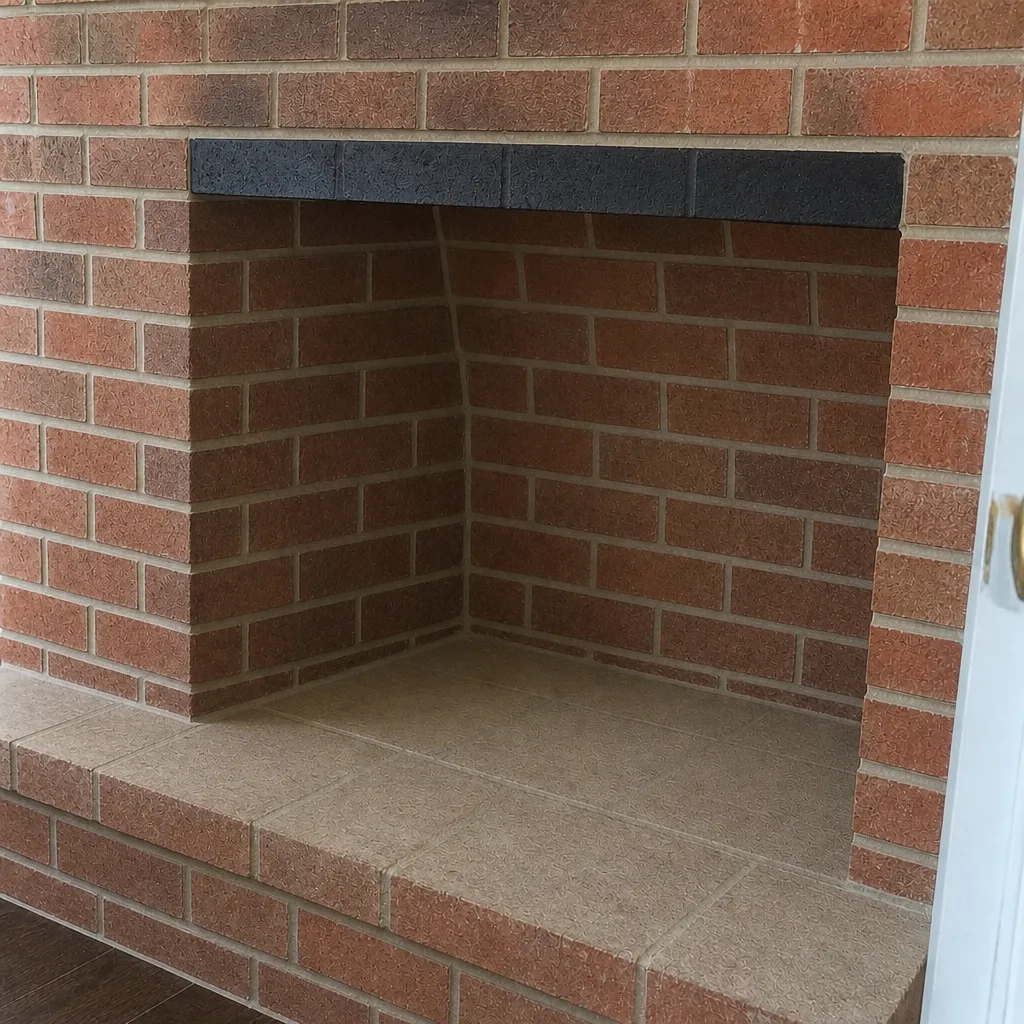
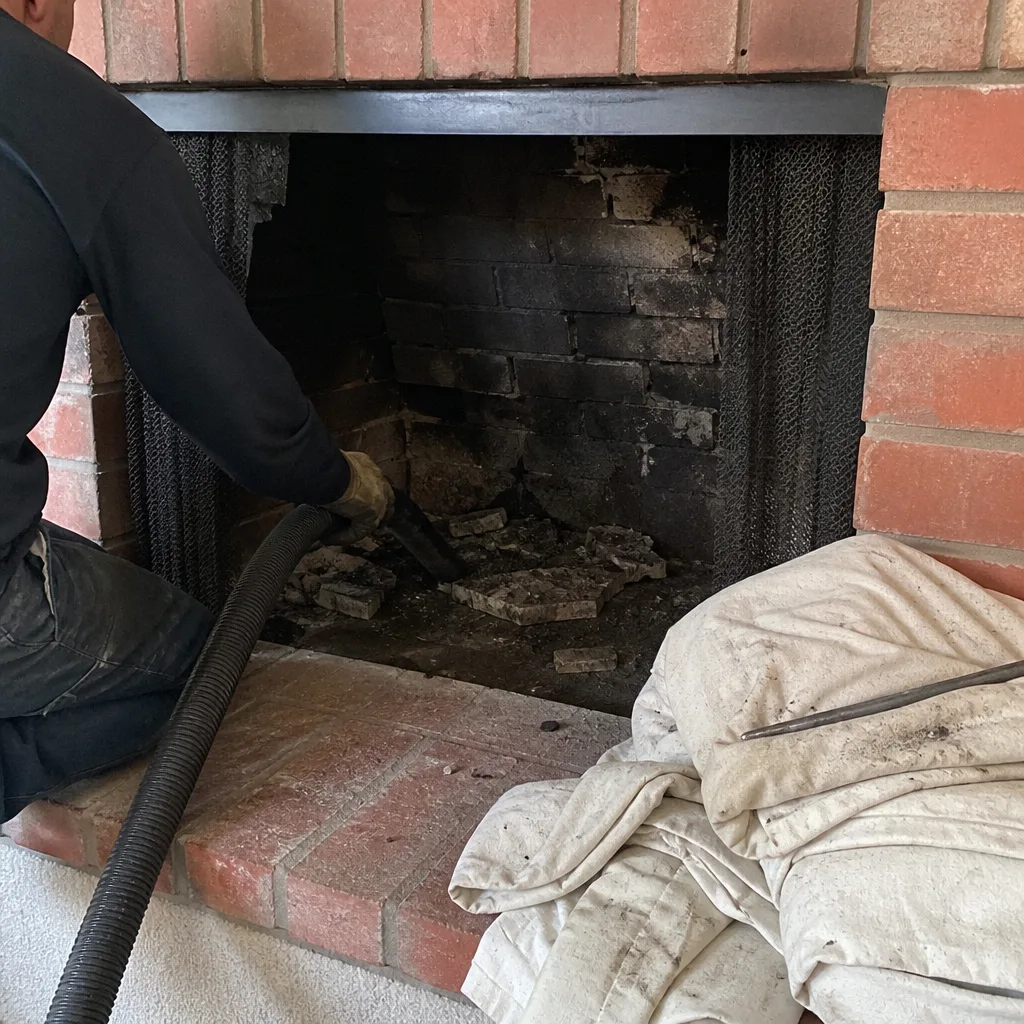
See the difference
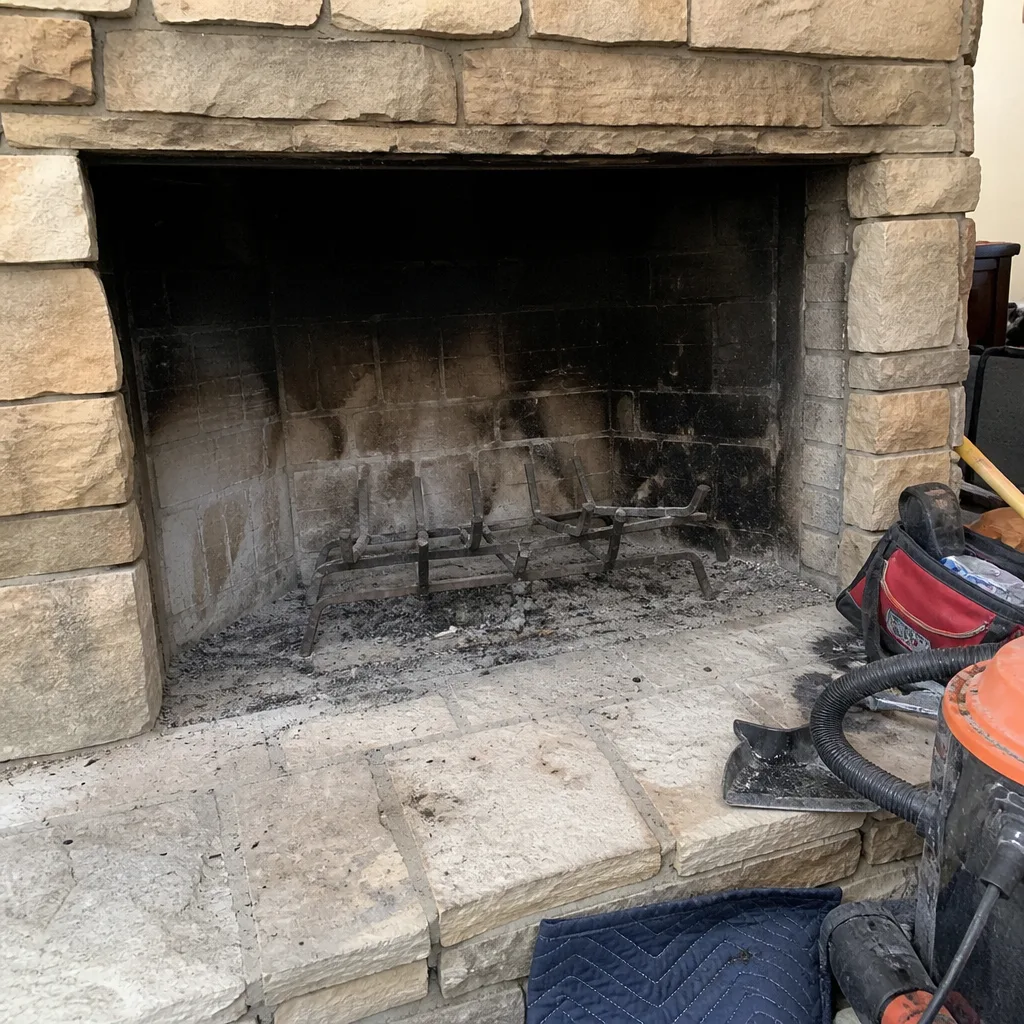 Before
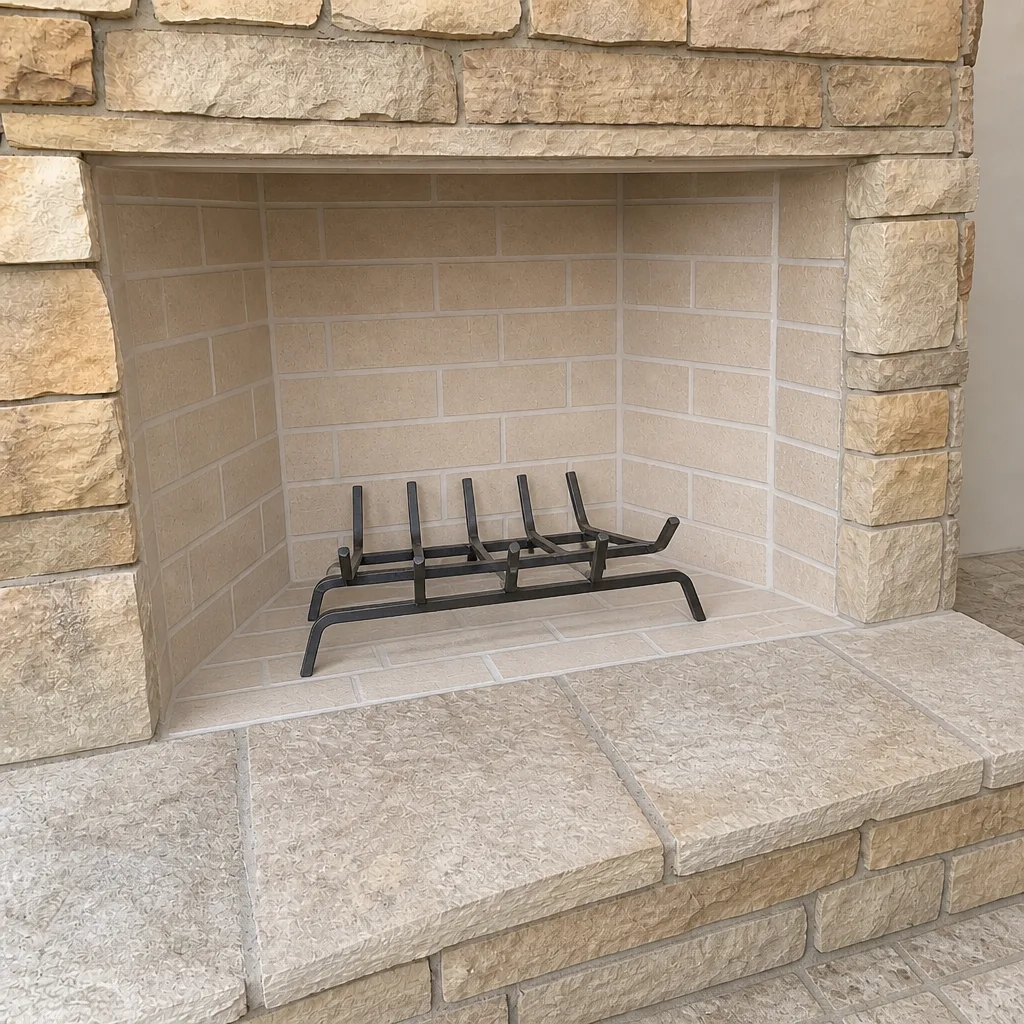 After
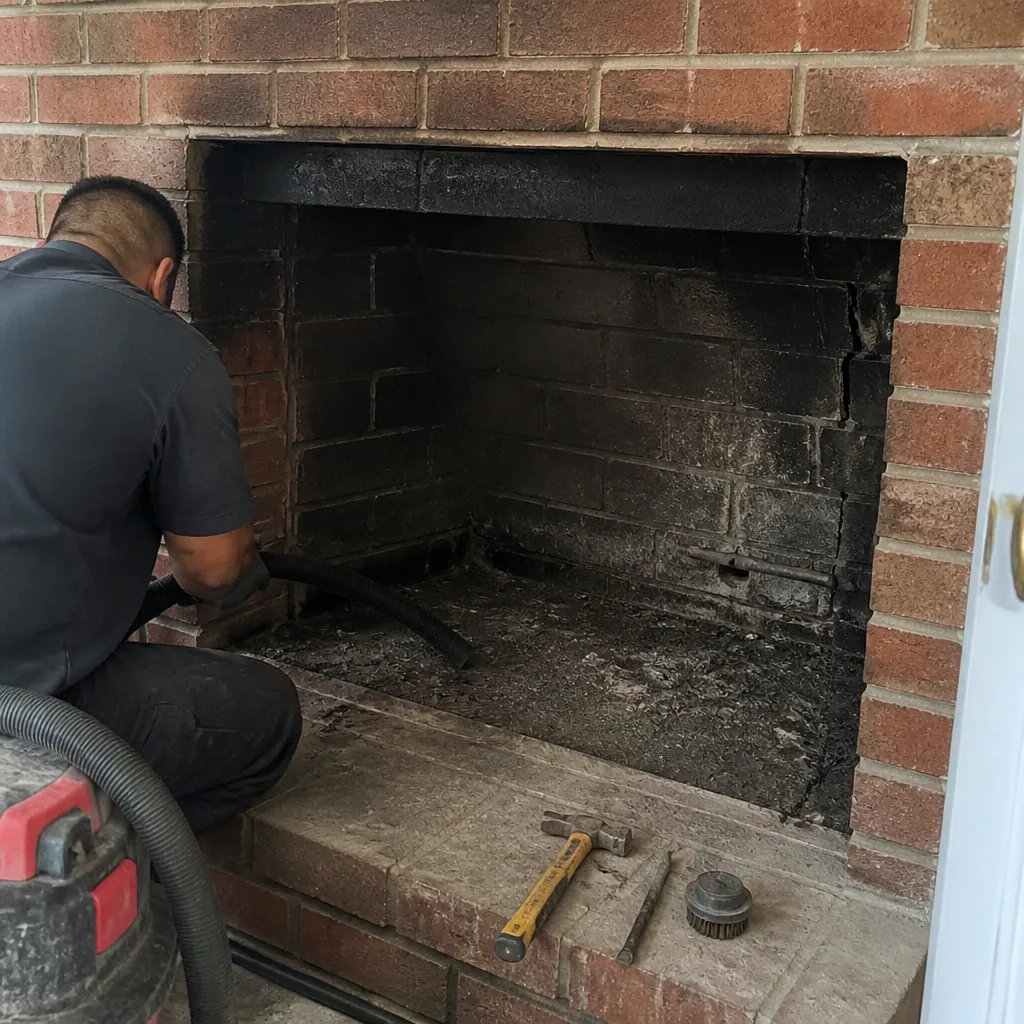 Before
 After
 Before
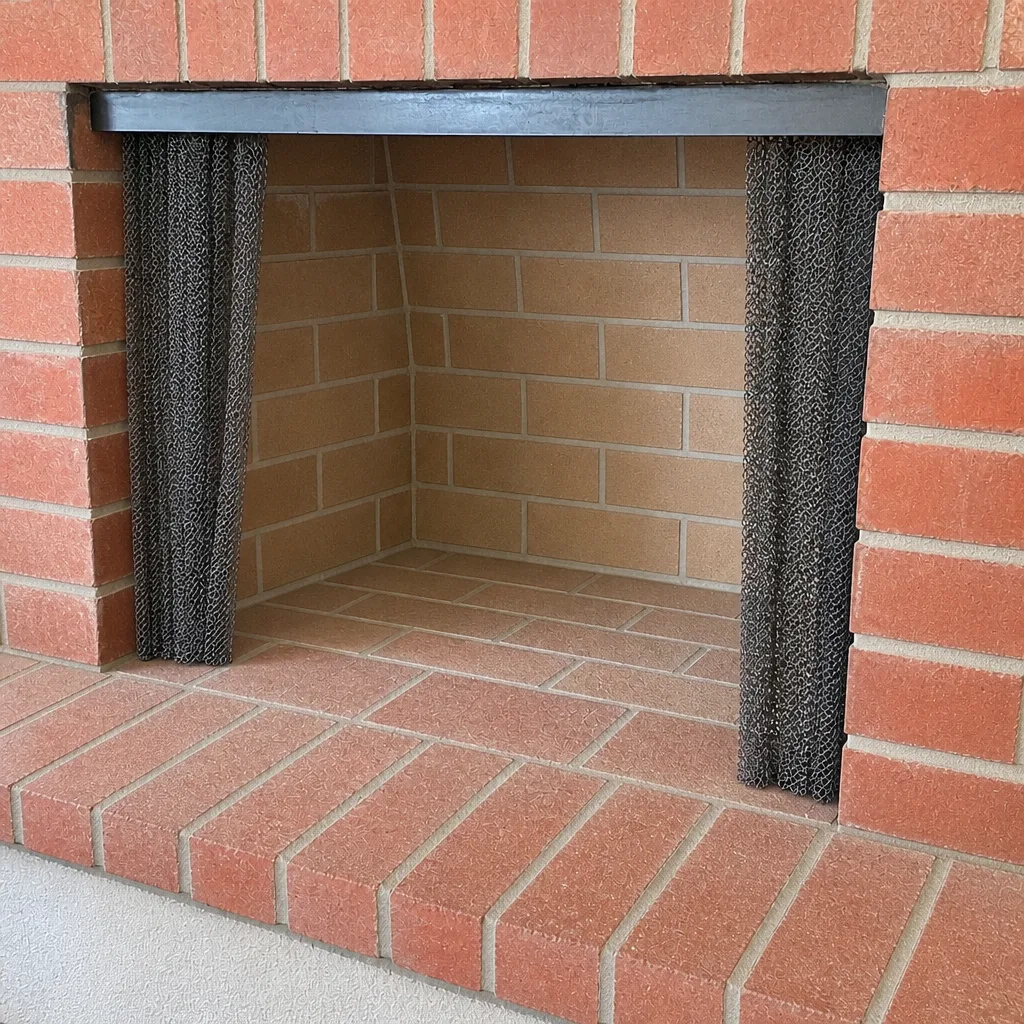 After
Common Mistakes to Avoid
- Booking on price alone without comparing scope. Two quotes that both say “chimney cleaning” can cover entirely different work. Compare line items, not totals. A $99 quote and a $250 quote aren’t a $151 savings; they’re a scope difference that shows up at the door.
- Skipping the camera inspection to save a hundred dollars. The flue interior is where the expensive problems hide. A visual-only inspection from the roof can miss a cracked tile that the camera would catch. In La Habra’s older housing stock, hidden flue damage is common enough that the camera scan is worth the extra line item.
- Postponing cap and crown work because it doesn’t feel urgent. Water intrusion doesn’t announce itself. A failing crown lets moisture into the masonry slowly and consistently, and by the time the damage is visible inside, the repair is structural. Cap and crown work is the cheapest moisture repair on the chimney.
- Accepting a generic patch compound on a flue repair. HeatShield and comparable industry-grade products are formulated for the flue environment. Generic mortar from a hardware store isn’t. A patch that fails in three years costs more than the correct material the first time.
- Assuming a Level II inspection isn’t needed because the fireplace “works fine.” A chimney can vent correctly and still have a cracked flue tile that’s letting combustion gases into the structure. Working draft isn’t a clean bill of health for the liner.
- Not asking whether the quote includes roof access for a two-story or steep-pitch home. Some quotes add a separate access charge on the day. Confirm before booking whether your roof profile is included in the stated price.
- Letting a chimney sit without a sweep because the fireplace is used only a few times a year. Creosote accumulates per burn, not per year of ownership, and even occasional use leaves deposits that harden over time. Annual inspection is about detecting change, not about how often you light a fire.
When to Call a Professional
Call a professional when the flue smells of creosote during warm months, when smoke rolls back into the room instead of drawing up, when you can see cracked or missing mortar on the chimney crown, when there’s water staining on the ceiling near the chimney, or when you hear animals in the flue. Call after any chimney fire, even a small one, and call before a home sale if the flue hasn’t been documented. If the gas fireplace or furnace is backdrafting or you smell gas, that’s not a scheduling call; treat it as an immediate safety concern and shut the appliance down. Creosote ignition and carbon monoxide are both real risks when a venting system is compromised, and neither is a wait-and-see problem. La Habra Chimney Sweep Pros offers free estimates in La Habra. Call (855) 337-1997. We answer 24/7. Fast dispatch from 7am to 7pm, Sunday through Friday.
Frequently Asked Questions
A standard chimney sweep in La Habra typically costs $150 – $299 for a single-flue cleaning with a Level I visual inspection. Adding a Level II camera inspection brings the total to roughly $250 – $450. The written estimate sets the final price. Call (855) 337-1997 for an exact quote. Estimates are free.
You need a liner repair or replacement if the existing flue lining is cracked, missing, or deteriorated to the point that combustion gases can escape into the structure. You don’t need one just because a sweep found heavy creosote or a dirty flue. The right answer comes from a camera inspection you can see for yourself, and HeatShield resurfacing is often a middle path that fixes a damaged but structurally sound flue without full replacement. If the liner can safely wait, we’ll tell you. Call (855) 337-1997 to book an inspection.
A chimney should be swept and inspected annually, and more often if you burn frequently or notice creosote buildup. The annual visit is about detecting change in the venting system as much as removing deposits. For a La Habra home with a wood-burning fireplace used through the cooler months, once a year is the standard. Call (855) 337-1997 to schedule the annual sweep.
Creosote continues to build up, and heavy creosote can ignite, which is a chimney fire risk that can damage the flue and, in serious cases, spread beyond the chimney. Separately, a compromised flue liner can let carbon monoxide and other combustion gases into the home. Neither risk announces itself with a warning. Skipping a year isn’t automatically a disaster, but skipping several without inspection is how small issues become structural ones. Call (855) 337-1997. We answer 24/7. Fast dispatch from 7am to 7pm, Sunday through Friday.
A lower quote usually reflects a narrower scope, not a better deal. Common exclusions in a low quote include the camera inspection, the roof access charge for steep-pitch or two-story homes, and any creosote treatment beyond a light brush. Compare the line items, not the totals, and ask what’s excluded. Call (855) 337-1997 if you want a written quote you can compare line by line. Estimates are free.
We handle the sweep, the inspection, the cap and crown work, the fireplace repair, and the chimney repair as one scope, using industry-grade product lines including HeatShield and DuraFlex where the repair calls for them. You’re not handed off to a separate repair crew after the inspection. That single-company accountability is the point. Call (855) 337-1997 to book the full scope in one visit.
The Bottom Line
Chimney cleaning pricing in La Habra varies because the scope varies, and the variation is where the real decision lives. A standard sweep is $150 – $299; a sweep with a Level II camera inspection is $250 – $450; a HeatShield resurfacing runs $1,800 – $4,200; a full DuraFlex reline runs $3,500 – $7,500. Those ranges are only useful if the quote you’re comparing covers the same work. Read the line items, confirm the inspection level, confirm the roof access, and confirm what’s excluded before you book. When a repair comes back from the inspection, ask for the camera evidence behind it. A good technician will show you, tell you plainly when the repair can wait, and give you a written estimate that sets the final price before any work begins. That’s how you evaluate a quote on substance rather than on the number at the bottom.
To get a written estimate for your La Habra home, call (855) 337-1997. We answer 24/7. Fast dispatch from 7am to 7pm, Sunday through Friday. One visit for the sweep, the inspection, and any cap, crown, or repair work the inspection turns up.
Written by the team at La Habra Chimney Sweep Pros.