
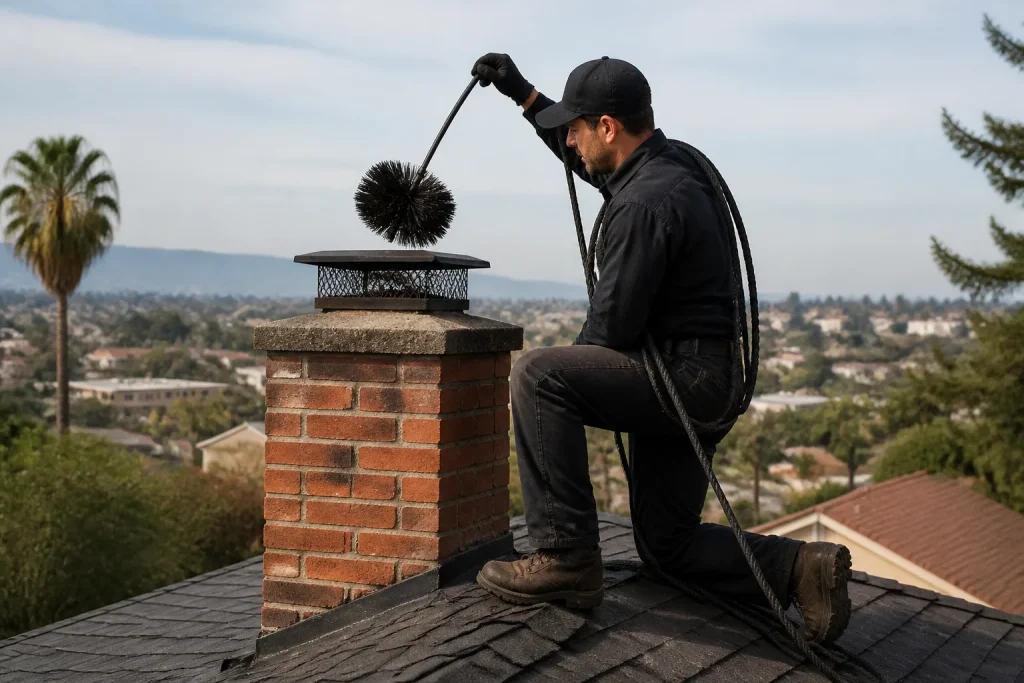
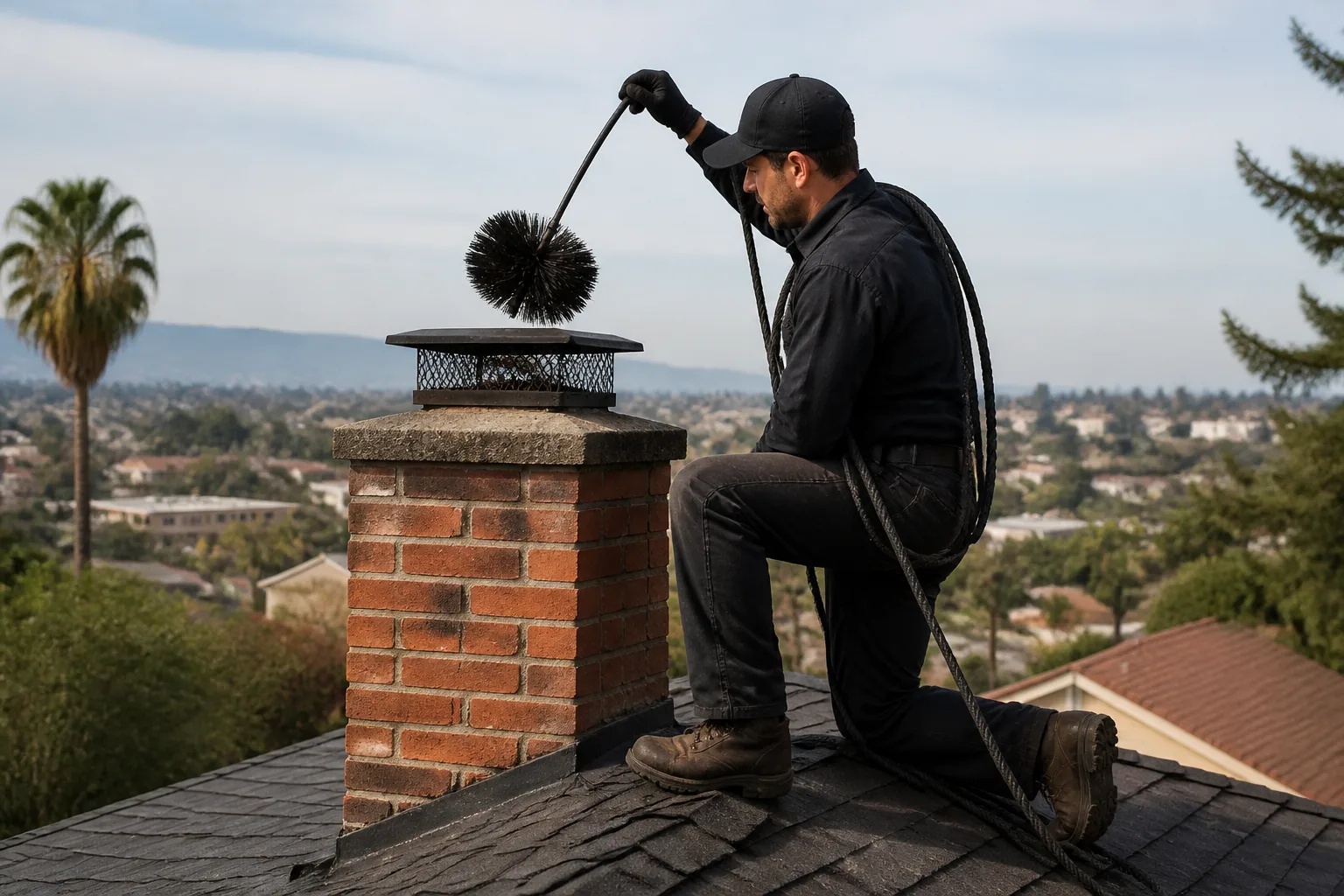
Top Signs You Need Chimney Cleaning Service – Don’t Ignore These
Most chimney cleaning checklists describe the obvious: a sooty smell, a visible creosote crust, a fireplace that smokes into the room. Those are real symptoms, but by the time they show up the chimney has usually been telling you something for a while. The signals that matter most in La Habra are the quiet ones. This guide covers the early warnings homeowners routinely dismiss, what each one actually means, and when it’s worth calling a professional instead of reaching for the fireplace tools yourself.
What are the early warning signs your chimney needs cleaning?
The earliest signs a chimney needs attention are a white salt-like stain on the exterior brick, a fire that draws more sluggishly than it used to, an acidic smell when the fireplace is idle, and rust on the damper. Each of these shows up before interior damage is visible, and each points to a different underlying problem. None of them is cosmetic, and none resolves on its own with a good scrub.
Here’s the short version of what to watch for:
- Efflorescence: a chalky white deposit on exterior masonry, meaning water is moving through the brick
- Changing draft: a fireplace that used to pull hard and now pulls weakly
- Odor type: musty versus sharp and acidic, which tells you very different things
- Rust on the damper plate: moisture getting in from above the roofline
- Seasonal gaps: a fire pit style of use that lets deposits harden and settle
What makes these so easy to overlook in La Habra is that none of them produce smoke in the living room or reduce your enjoyment of the fireplace day to day. They develop quietly through the warm months and only become obvious the first cold evening you light a fire.
Efflorescence on the exterior brick: what that white stain is telling you
A white, powdery stain on your chimney’s exterior brick isn’t a cosmetic issue. It’s efflorescence, and it means water is actively moving through your masonry. As moisture travels through brick and mortar, it dissolves salts inside the material and carries them to the surface. When the water evaporates, the salts are left behind as that chalky white deposit. Seeing it means the path already exists.
This is the warning most homeowners paint over or wash off and forget. That’s understandable, and it’s also how a repairable problem gets expensive. Efflorescence on a La Habra chimney typically points to moisture entering at the crown or cap, both of which sit above the roofline where almost no one looks. The crown is the concrete slab at the top of the chimney; the cap is the cover over the flue. When the crown cracks or the cap fails, water runs down into the masonry and the damage spreads from inside out.
What you’ll want to do with efflorescence:
- Wipe a small patch with a damp cloth and see whether it returns after it dries. If it comes back, water is still moving through the brick.
- Look up at the crown and cap from the ground with binoculars if you can. Cracks in the crown or a missing or bent cap are frequently the source.
- Have the top of the chimney inspected before you repaint or seal the exterior. Sealing over an active moisture path traps water inside.
Our preference for crown and cap work is professional-grade material, brands like Gelco and Olympia Chimney rather than a generic hardware-store patch. Moisture prevention at the top of the chimney prevents most of the long-term deterioration that starts down below.
Your draft is changing: why a sluggish fire points to creosote
If your fireplace used to draw well and now pulls sluggishly, that’s a creosote accumulation signal, not a seasonal quirk. Creosote is the tar-like byproduct of burning wood. As it builds up on the inner walls of the flue, it narrows the passage, and a narrow passage means a weaker draw. The chimney isn’t failing broadly. It’s just getting clogged the way a drain does, gradually and without much drama.
This is one of the easiest signs to rationalize away, especially in La Habra, where a fireplace might be used for a few months of the year. You light a fire in late fall, notice it’s a little slow, assume the wood is damp or the weather is odd, and move on. By the next season the buildup has had months to settle. The fix isn’t to light a hotter fire to compensate; starved of draft, incomplete combustion adds more creosote to a flue that already has too much.
Symptoms that belong in the same category:
- Smoke spilling from the firebox when you first light a fire rather than once it gets going
- A fire that’s noticeably harder to start than it once was
- Visible soot on the firebox walls around the damper after a burn
- A draft that improves on some days and worsens on others, suggesting a partial obstruction
In our experience, a draft that shifts noticeably over a season is worth a chimney sweep and inspection before you assume the fireplace has changed character. A camera inspection shows you what’s actually on the flue walls, and you see the photo report yourself rather than taking anyone’s word for it.
The smell test: musty flue versus sharp, acidic creosote
Chimney odor tells you which problem you have. A musty smell drifting from the fireplace when it’s not in use suggests a dirty flue with soot, organic debris, or moisture. A sharp, acidic, almost tar-like smell indicates Stage 2 creosote or liner damage, and that one deserves faster attention. The two are not the same warning, and treating them the same wastes time and money.
Stage 2 creosote forms in dark, shiny, hardened sheets or a crusty mass that clings to the flue walls. It’s the stage that matters most for chimney fire risk, because the material is dense and stubborn and doesn’t sweep away like loose soot. The acidic smell comes from off-gassing as the deposit sits on the flue. Alongside it you may notice cracked or flaking material around the flue tiles, an indication that heat and acidic moisture have gone to work on the liner itself.
What to listen for, or rather, sniff for:
- Musty and earthy: soot buildup, leaves, animal debris, or low-level moisture. Often addressed with a good cleaning and a check on the cap.
- Sharp and acidic: Stage 2 creosote or a compromised liner. Worth a Level II inspection with a camera.
- Smoky and cold coming down: a sign the flue isn’t venting as it should, which circles back to draft.
Odor is one of the clearest signals we get from a chimney, and the smell test is free. If the smell has changed, it’s a reason to look. If what the camera shows is a damaged flue liner, brands like HeatShield are worth knowing about: HeatShield is a resurfacing system that can often restore a damaged flue without demolishing the chimney, which means far less disruption than a full reline.
Rust on the damper plate: what it says about your cap and crown
A rusted damper plate is almost always a sign that water is getting into the chimney from above. The damper plate is one of the most protected components in the whole system, tucked inside the firebox above the fire and below the flue. If it’s showing rust, water is reaching it somehow, and the path is above the roofline. That’s a cap and crown conversation, not a cleaning one.
In La Habra, where a fireplace might go weeks between uses, the water that gets in doesn’t always dry quickly. It sits against the damper plate and works at the metal, and the same water that’s rusting the damper is softening the mortar and stone of the firebox walls. This is the mechanism behind most of the fireplace damage we see: not a sudden failure, but the slow accumulation of moisture from a cap that no longer sheds water properly.
Check for these alongside rust on the damper:
- Peeling paint or staining on the firebox walls
- Crumbling mortar between the firebrick
- Water or dampness in the firebox after rain
- A cap that’s visibly bent, missing bars, or absent entirely
A cap and crown is the single most effective thing you can do to protect a chimney from water. It’s also one of the details many routine cleaning crews skip, because top-of-chimney work falls outside a simple sweep. We handle it as its own service, so a single call covers the whole picture: sweep, inspection, and cap and crown work without handing off to another contractor when the inspection reveals a problem.
Why La Habra’s fireplace use pattern makes things worse
La Habra’s mild winters mean most fireplaces get used for a few months and sit for the rest. That light-use pattern actually accelerates certain problems compared to heavier-use climates. Heavy-use chimneys get hot and stay hot long enough that some of the creosote burns off; light-use chimneys build it up in layers and let it harden between fires. Periods of disuse let deposits cure into harder Stage 2 material and let any water that gets in sit against the flue and masonry rather than evaporate away.
The result is a seasonal rhythm: warm months, when the chimney is out of sight and out of mind, followed by a cold snap when everyone lights a fire at once and discovers a problem. The pattern shows up in two ways. First, families notice an odor or draft issue the first cold week, when scheduling a sweep is already behind. Second, small moisture problems from the previous winter’s rain have had a whole warm season to spread through the masonry and soften the mortar.
What makes La Habra different from a mountain cabin is that mild weather means we don’t get the natural reminder to check the chimney. There’s no snow to notice, no long heating season to notice draft for weeks. Instead, the fireplace is decorative most of the year, then suddenly necessary, and small problems become the first thing you notice.
A practical rhythm: have the chimney inspected and cleaned before the first fire of the season, not after. That way the sweep confirms the flue is clear, the camera confirms the liner is intact, and cap and crown work has a few dry weeks to cure before the chimney is under load. It also means you’re making decisions with a photo report in hand rather than reacting to a smoky room.
When to call a pro
Call a professional when you see efflorescence on the brick, when the draft has dropped off, when the smell has turned sharp or acidic, or when the damper is rusting. A sweeping and inspection is the starting point for all four, and none of them is something to sort out with a flashlight, a wire brush, and a ladder. Creosote combustion, cracked flue tiles, and blocked flues are the reasons a chimney fire starts in the first place, and a sweep plus a Level II inspection finds those problems before they become a chimney fire. Our technicians have up to 14 years of experience and the inspection includes a camera and a photo report you can review yourself.
If the flue liner turns out to be damaged, the conversation isn’t automatically a full reline. Liners with bends and offsets that rigid-liner crews can’t reach can often be handled with a flexible system, and our lineup includes DuraFlex flexible liners for exactly that case. Where a resurfacing makes sense instead, HeatShield can restore a compromised flue without demolishing the chimney. That combination means fewer circumstances where the only answer is the most expensive option. You’ll see the evidence before anyone recommends a thing, and if something can safely wait, we’ll tell you that too.
Related services in La Habra: fireplace repair and chimney repair for the structural side of anything the inspection turns up.
The Bottom Line
The signs worth acting on are the quiet ones: a white stain on the exterior brick, a fireplace that draws more slowly than it used to, a smell that’s turned sharp rather than musty, and rust on the damper. Each points to something different, and each is easier and cheaper to fix early. Think of your chimney as a venting system, not just a fireplace feature, and the early warnings make more sense.
If you see any of these, a sweep and inspection is the right first step. Nothing should be recommended without camera evidence you can look at for yourself, and we’ll say plainly when work can wait. Built to last, not patched to pass, is the standard we hold to.
If you’re in La Habra and need help, La Habra Chimney Sweep Pros offers free estimates. Call (855) 337-1997. We answer 24/7. Fast dispatch from 7am to 7pm, Sunday through Friday. La Habra Chimney Sweep Pros.
Frequently Asked Questions
Once a year is the standard answer, and it’s a good starting point for a La Habra home whose fireplace runs lightly a few months a year. The annual check matters less because of the use and more because it catches water entry, cap and crown damage, and liner wear before those spread. If your firewood is particularly resinous or you burn often, the deposit can build faster; a camera inspection tells you what the flue actually looks like rather than what a calendar says. Call (855) 337-1997 for a free estimate so you know where you stand.
No. A cleaning log can loosen a little light soot, but it can’t remove hardened creosote, inspect the flue, or tell you anything about the cap, crown, or liner. Relying on one gives you a false sense of having addressed the problem. The only way to know the flue is clear and the liner is intact is a physical sweep plus a camera inspection. Call (855) 337-1997 for a free estimate before your next fire.
The moisture that caused the efflorescence keeps moving through the masonry, and it spreads. What starts as a stain on the exterior often becomes softened mortar, spalling brick, and damage to the firebox walls that you can see indoors. Sealing or painting over it traps the water inside. The fix is to find and close the moisture path, usually at the crown or cap, then let the masonry dry. Call (855) 337-1997 for a free estimate on an inspection that traces the water back to its source.
Yes, and a fairly telling one. The damper sits in one of the most protected places in the chimney, so rust there means water is getting in from above, almost always through a failed cap or a cracked crown. The rust itself is minor; what it tells you about moisture entering the firebox is the real issue. Left alone, the same water softens mortar and damages the firebox walls. Call (855) 337-1997 for a free estimate and a look above the roofline.
Written by the team at La Habra Chimney Sweep Pros.
Need Chimney Cleaning Help?
Call La Habra Chimney Sweep Pros - the local pro we connect you with is licensed and insured, here with fast help in La Habra.
(855) 337-1997